Armored Cable - BX, AC, and MC Wiring Identification Guide
Armored cable is an electrical cable assembly with insulated conductors wrapped in a flexible metal armor that protects the wiring from physical damage.
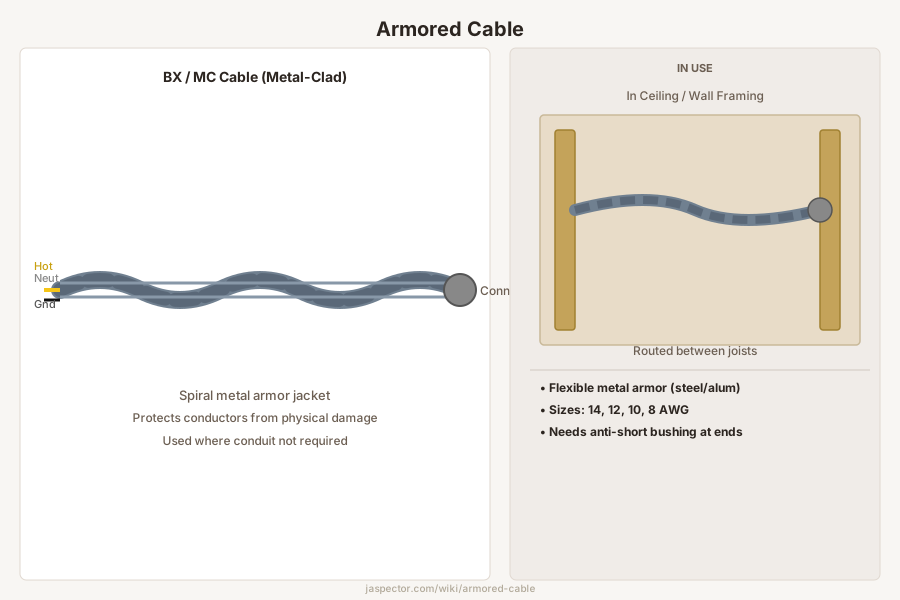
What It Is
Armored cable combines branch-circuit conductors with a spiral or interlocking metal sheath. In older homes it is often called BX, though that name started as a trade designation and does not describe every modern armored cable product. The metal armor provides mechanical protection and, depending on the cable type and installation, may also serve as part of the equipment grounding path.
This cable was widely used before modern nonmetallic cable became common, and it still appears where extra durability is needed. Its condition matters because age, improper terminations, and damaged bonding strips can affect grounding and safety.
Types
Common residential types include older AC cable, which uses metal armor and a bonding strip for grounding, and MC cable, which includes a dedicated grounding conductor inside the armor. The two look similar but are not interchangeable in every application.
Where It Is Used
Armored cable is used in older branch-circuit wiring, basement and utility spaces, multifamily construction, and locations where exposed cable needs more protection than standard NM cable provides. It is often found feeding outlets, lights, furnaces, and unfinished-area equipment.
How to Identify One
Look for a flexible metallic outer jacket with a coiled or corrugated appearance rather than a plain plastic sheath. At boxes and fixtures, armored cable enters through special metal connectors instead of simple plastic cable clamps. Frayed armor, loose connectors, and cloth-insulated conductors inside older cable are signs the wiring may need evaluation.
Replacement
Replacement is common when the armor is damaged, grounding is unreliable, insulation inside the cable is brittle, or a remodel exposes outdated wiring that no longer meets the needs of the circuit. Any extension or replacement work should be done with listed connectors and proper grounding methods. Because it is branch-circuit wiring, permits and electrical inspection are commonly required for replacement.
Frequently Asked Questions
Armored Cable — FAQ
- Is armored cable the same as BX cable?
- People often use the names interchangeably, but BX is an older trade term. Modern installations may use AC cable or MC cable, which look similar but handle grounding differently.
- Is old armored cable safe?
- It can be, if the armor, connectors, bonding path, and conductor insulation are all still in good condition. Problems arise when fittings are loose, the insulation is brittle, or grounding continuity has been compromised.
- How do I know if armored cable needs replacing?
- Visible armor damage, cloth-insulated conductors that crack when disturbed, ungrounded receptacles, and overheated or loose box terminations are strong warning signs. An electrician can test grounding continuity and overall condition.
- Can I connect new wiring to existing armored cable?
- Sometimes, but the splice has to be made in an approved box with proper fittings and grounding. Whether it makes sense depends on the cable type, condition, and what local electrical code allows.
- Do I need a permit to replace armored cable?
- Usually yes. Replacing branch-circuit wiring is typically permitted and inspected electrical work, even when it is a small section in an existing house.
Have a question about your project? Get personalized answers from our team — $9/mo.
MembershipAlso in Electrical
- Range Outlet Appliance Circuits
- Appliance Whip Appliance Connections
- Dishwasher Cord Appliance Connections
- Dryer Cord Appliance Connections
- Range Cord Appliance Connections
- Generator Backup Power
- Transfer Switch Backup Power
- Box Cover Boxes