Angle Bracket — Structural L-Shaped Steel Connector
An angle bracket is an L-shaped steel connector used to join two structural members meeting at approximately 90 degrees, transferring load through bolted or nailed bearing surfaces.
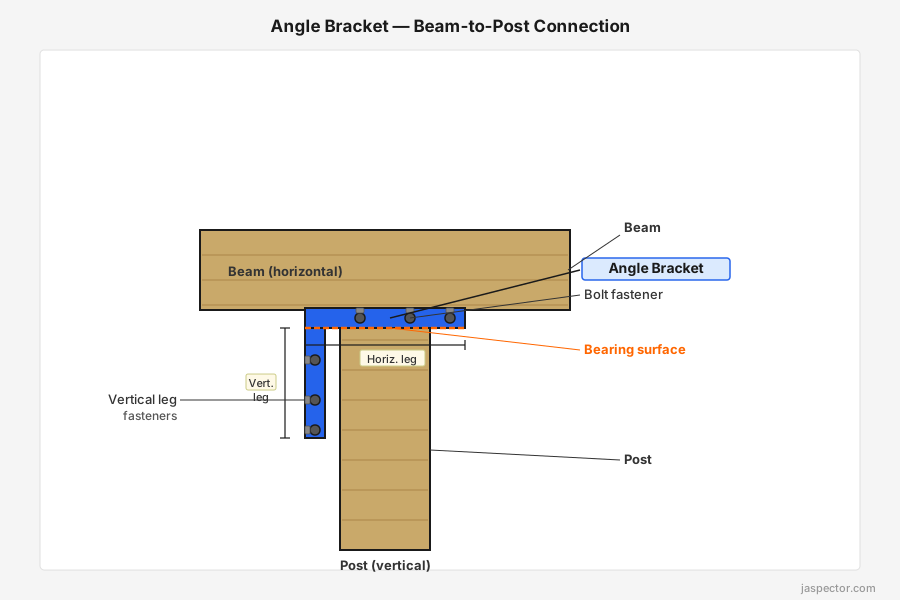
What It Is
An angle bracket — also called a steel angle clip or structural angle — consists of two flat legs welded or formed at a right angle, typically from hot-rolled or cold-formed steel. The legs are drilled or pre-punched with bolt holes or nail holes. When installed, one leg bears against one structural member while the other bears against the connecting member, and fasteners through both legs lock the joint.
In residential and light commercial framing, angle brackets appear at beam-to-post connections, deck ledger attachments, masonry-to-wood ties, and stair carriage anchors. In heavier construction, structural steel angle (designated by leg dimensions and thickness, e.g., L3×3×1/4) is used for beam seats, column base plates, and connection plates.
The term is sometimes used loosely to describe any bent metal connector, including lighter-gauge stamped connectors. In engineering contexts, it specifically refers to a hot-rolled or cold-formed angle section used as a structural connector.
Types
Light-gauge stamped angle clips (such as Simpson A34, A35, or equivalent) are 18-gauge galvanized steel connectors used for general framing connections — rafter to plate, joist to beam, blocking to joist. They are nailed with specified structural nails and rated for specific load values.
Heavy structural steel angle is hot-rolled steel (ASTM A36 or A572) used in engineered connections. It is bolted with structural bolts (A307 or A325). This type appears in commercial construction and engineered residential additions.
Post base angle bracket combines an angle bracket with anchor bolt holes for connecting a post to a concrete foundation.
Masonry angle bracket (shelf angle) is a heavy steel angle anchored to a foundation or structural frame to support brick veneer or stone cladding. See also the brick ledge entry for context.
Where It Is Used
Angle brackets appear wherever two structural members meet at a corner and require a mechanical connection beyond nailing through the face grain. Common locations: beam-to-post bearing connections in deck and floor framing, wood-beam splices, connections between beams and masonry or concrete, and as supplemental ties where lateral load transfer is required by engineering or code.
Seismic and high-wind regions have specific prescriptive requirements for angle bracket use in framing connections. Simpson Strong-Tie and USP Structural Connectors are the primary manufacturers in the residential market.
How to Identify One
An angle bracket at a framing connection will appear as a bent metal plate at the intersection of two structural members. Light-gauge connectors are typically silver galvanized or black, with multiple nail holes. Heavy structural angle will be larger, thicker, and bolted. In masonry veneer applications, the shelf angle appears as a horizontal steel bar projecting from the face of the structure at intervals, supporting the brick or stone above.
Replacement
Light-gauge angle clips rarely fail in service; they are more often found to be missing from connections that were framed without them, or installed with the wrong fastener type or count. Adding missing clips does not require removing structural members — the connector is surface-applied with appropriate nails or screws. Heavy structural angle connections should only be modified with engineering oversight.
Frequently Asked Questions
Angle Bracket — FAQ
- What is the difference between an angle bracket and a joist hanger?
- A [joist-hanger](/wiki/joist-hanger/) is a U-shaped connector that cradles the full end of a joist from underneath. An angle bracket is an L-shaped connector that fastens to the face of two intersecting members. Joist hangers transfer load through bearing at the seat; angle brackets transfer load through the fasteners in both legs.
- Do angle brackets need to be a specific size for a given load?
- Yes. Angle bracket load ratings depend on leg dimensions, steel thickness, the number and type of fasteners, and the direction of the applied load. For structural applications, use the manufacturer's load tables (Simpson Strong-Tie, USP, etc.) or consult a structural engineer to confirm the connector is appropriate for the load.
- Can I use a standard angle bracket for outdoor or deck applications?
- Only if the bracket is rated for exterior exposure. Connectors for treated lumber decks must be hot-dipped galvanized (HDG) or stainless steel because ACQ and CA treated lumber is highly corrosive to standard zinc plating. Check the connector manufacturer's specifications for compatibility with the lumber treatment in use.
- How are angle brackets fastened?
- Light-gauge stamped connectors are fastened with specific structural nails (often 10d or 16d) or structural screws specified by the manufacturer — the fastener type and count determine the rated load. Heavy structural angle is typically bolted with structural bolts and nuts. Never substitute drywall screws or common nails in structural connectors.
- Is a permit required to install angle brackets?
- Adding prescriptive connectors to an existing framing system as a maintenance item generally does not require a permit. However, if the bracket installation is part of a larger structural modification — adding a beam, reinforcing for seismic upgrade, or deck construction — a permit will be required and the connection details will be subject to inspection.
Have a question about your project? Get personalized answers from our team — $9/mo.
MembershipAlso in Structural
- Access Panel Access & Openings
- Attic Hatch Access & Openings
- Construction Adhesive Adhesives & Sealants
- J-Bolt Anchorage
- Expansion Anchor Anchors & Fasteners
- Molly Bolt Anchors & Fasteners
- Baffle (Attic Rafter Vent) Attic & Roof
- Attic Hatch Cover Attic Access